


This used to be what my bathroom looked like.
I never expected a simple baseboard removal to lead to a full shower gut — but that’s exactly what happened when I discovered a shower leak under my tile floor.

When I removed the baseboard in my bathroom, I immediately noticed wet drywall and mold forming near the bottom. That was my first sign something wasn’t right. I pulled the door casing next and removed more drywall to try to track down the source of the leak.
And here’s the thing — I couldn’t find it.
By the way here’s a list of my favorite and most used tools for demo.
Trying to Find the Source of the Shower Leak
At that point, I hired plumbers to investigate. After looking things over, they couldn’t definitively locate the issue either. Their best guess was that the gasket around the shower valves wasn’t sealing properly, allowing water to seep into the wall.
They caulked around the valves, charged $400, and left. But I wasn’t convinced that was the real problem.
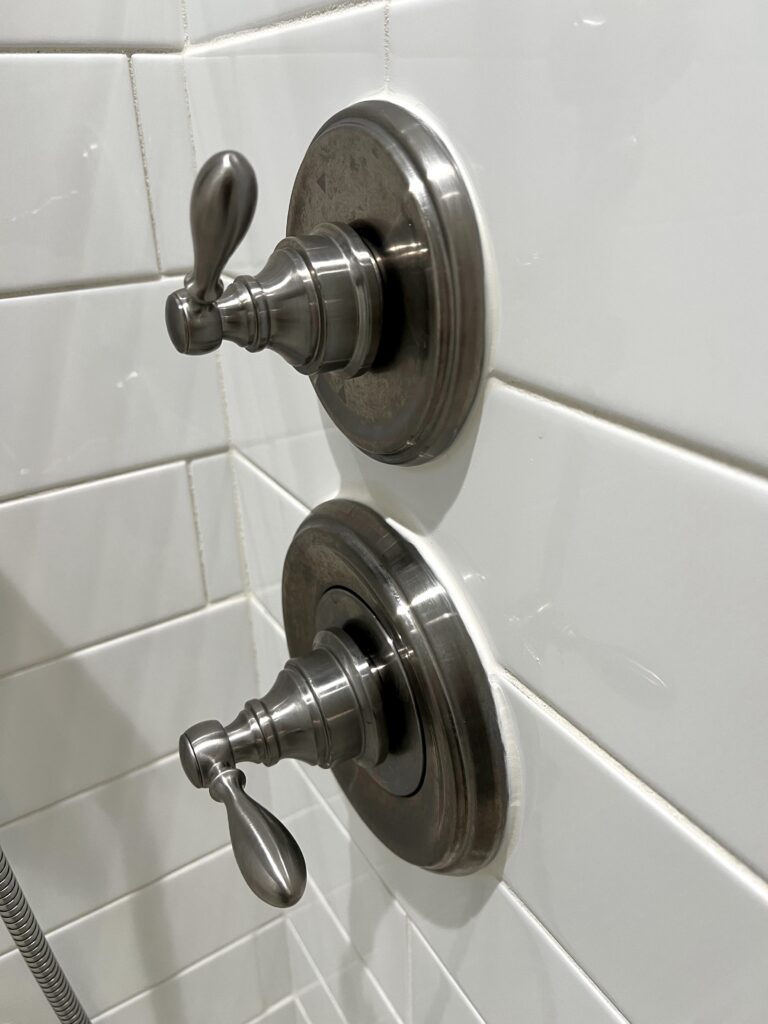
A couple of weeks later, I noticed water seeping up through the shower floor – even though the shower wasn’t being used. That’s when I knew this wasn’t a simple plumbing issue.
Signs of a Failed Shower Pan Liner
I reached out to a contractor friend and explained everything I was seeing. Without hesitation, he said it sounded like a failed shower pan liner. That diagnosis made sense. Unfortunately, the only way to fix a shower liner installation failure is to tear out the shower floor and part of the walls. There’s no shortcut.
So that’s what we did.
I hired a glass company to remove the shower doors, asked my stepdad to help, and we demoed the shower over two long days. Once everything was opened up, the real cause of the leak became obvious.
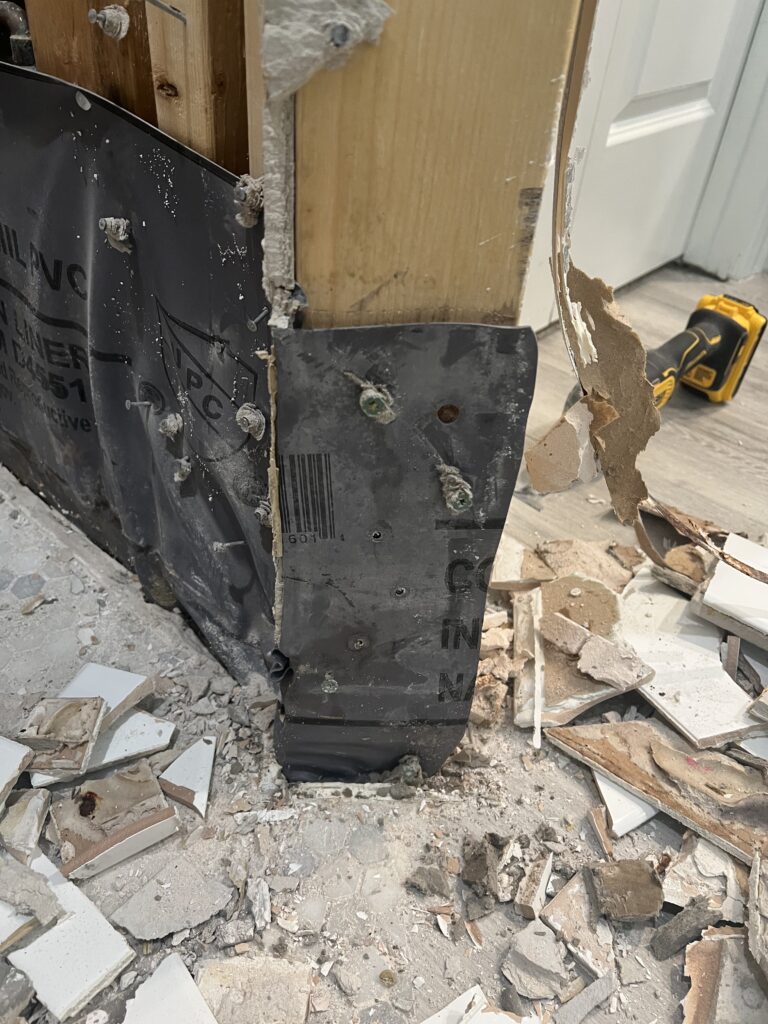
What Actually Caused the Shower Leak
The liner itself wasn’t the issue – it was how it was installed.
In multiple corners, the PVC liner had been cut to fit awkward angles but was never properly sealed or flattened. Those small folds and waves created the perfect path for water to slip behind the liner and sit there.
The same mistake showed up:
- In the opposite corner
- Near the shower bench
- Around the drain area
The shower seat was especially bad. The cement blocks were wet, the insulation had mold, and waterproofing was barely used. RedGard was applied only on the front of the bench – not where it actually mattered.
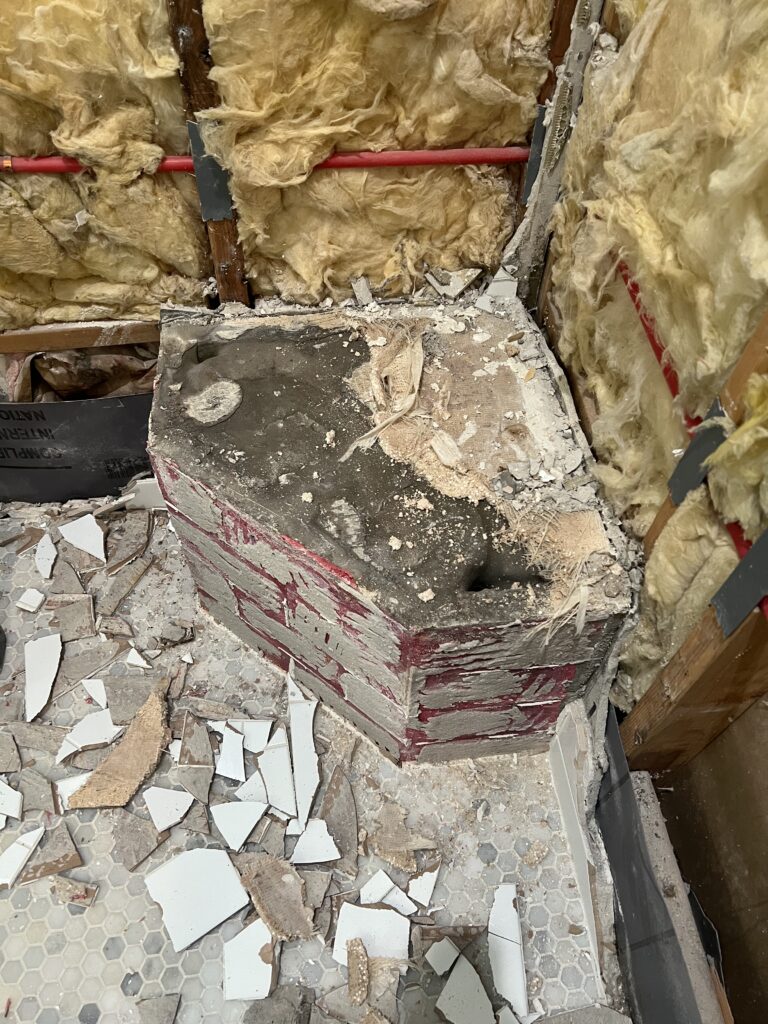
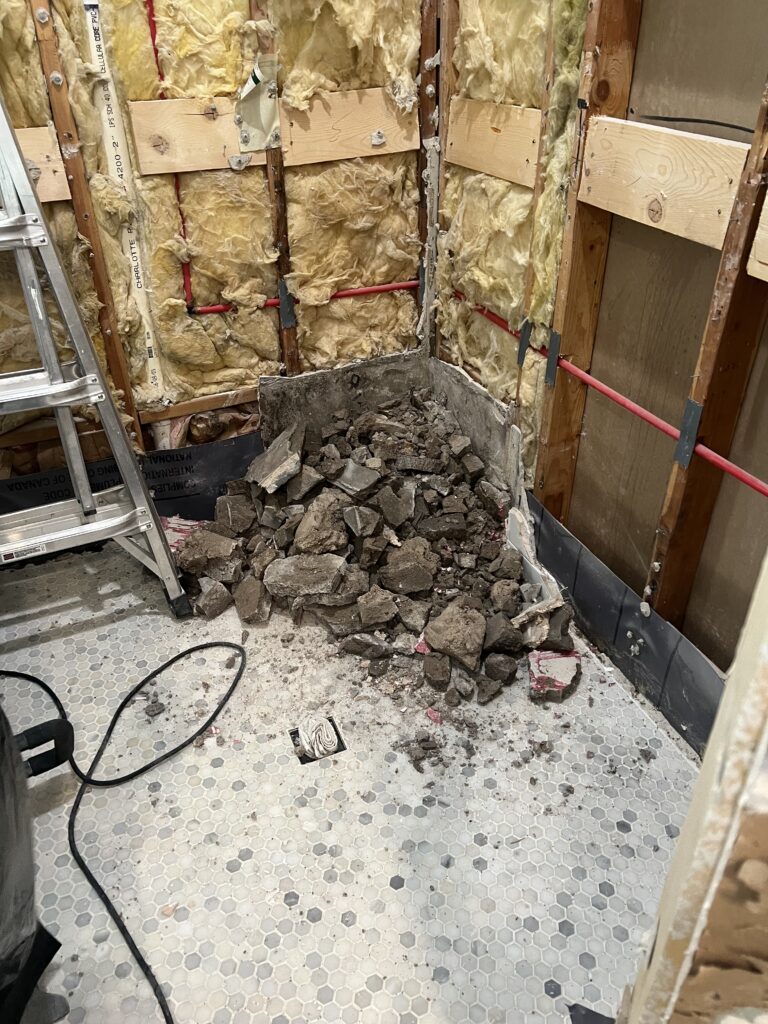
And the drain? It wasn’t properly attached to the drain pipe. It was essentially being held in place by gravity.
What Was Under the Shower Floor (Fair Warning)
Under the shower liner was years of trapped moisture, mold, and buildup. The smell alone was awful.
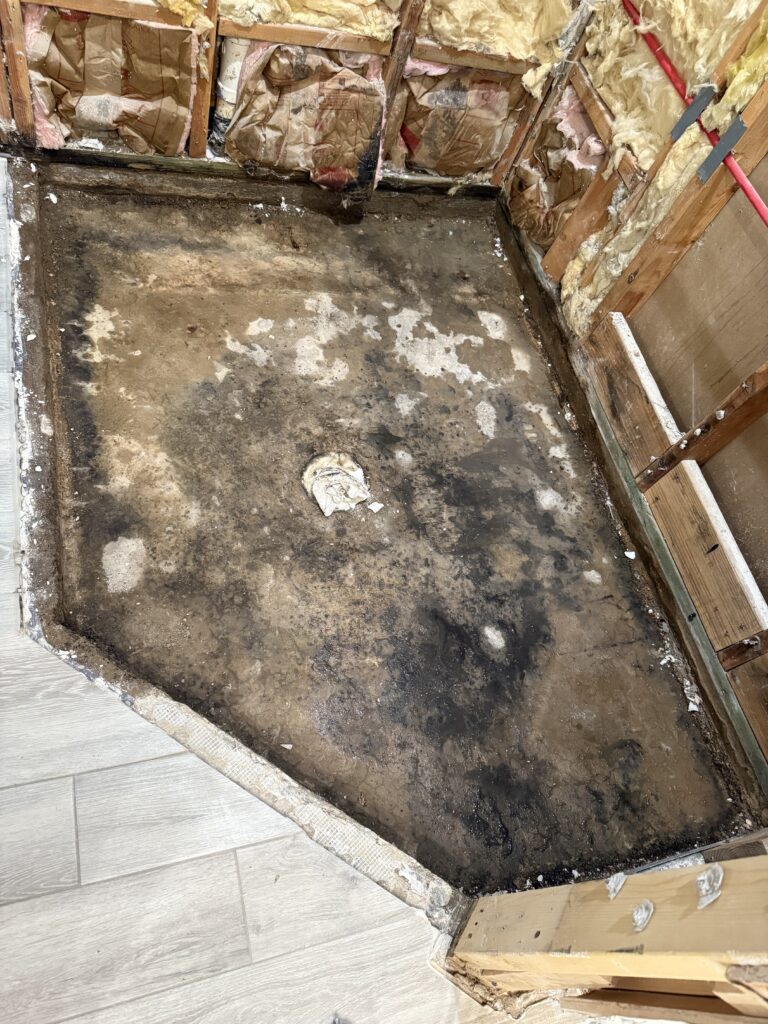
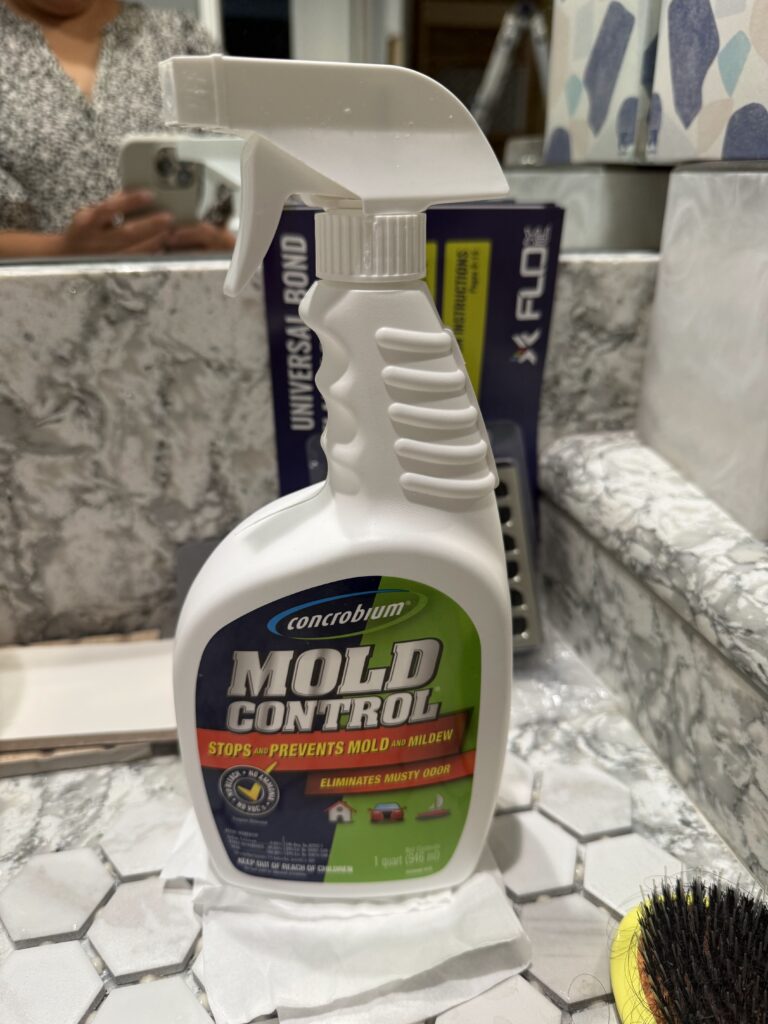
Thankfully, the structural framing of the bathroom wasn’t damaged. We treated the mold, removed affected materials, and I used Concrobium to clean and seal everything. Then I left the space open to air dry for weeks before rebuilding.
Lessons Learned From a Failed Shower Pan Liner
This experience taught me a lot – and these are lessons I won’t forget:
- Don’t ignore leaks. The longer you wait, the more damage they can cause.
- Use a closed waterproofing system. Modern shower systems are far more reliable than traditional liners (I went with Schluter Kerdi for the remodel).
- Ask about warranties. Quality contractors often offer 5-10 years.
- Ask questions. This is your home. You deserve to understand what’s being installed.
The hardest lesson? You can do everything “right” and still end up with problems.
This shower was installed by a licensed contractor. References were checked. Multiple bids were reviewed. And it still failed.
Gratitude + Moving Forward
I’m incredibly grateful that I’ve been able to take on most of this remodel myself and grateful for the people online who genuinely want to teach. A special thank-you to my contractor friend The Mexican Carpenter and also The Tile Coach. I was overwhelmed stepping into this on my own, and their guidance made a huge difference.
I’m sharing this experience so others can learn from it. Even if you never plan to DIY a bathroom remodel, knowing the signs of a failed shower pan liner can help you ask better questions and avoid costly mistakes.
I’ll be sharing more content as I rebuild this bathroom, so if you want to follow along, make sure you’re signed up for my newsletter where I’ll be sharing all about this remodel.
If you’d like to check out a project where I remodel a smaller bathroom with microcement, you can check it out on this blog post here!
Happy DIYing! 🤍
FAQ Section
Can a shower leak even if it’s not being used?
Yes. If water is trapped behind a failed shower pan liner, it can slowly migrate and surface later – even without active use.
What causes water to come up through a shower floor?
This is often a sign of a shower liner failure, improper slope, or a drain connection issue allowing water to sit under the tile.
How long should a shower pan liner last?
When installed correctly, a shower pan liner should last decades. Most failures are due to improper installation, not material defects.
What’s the difference between a closed shower system and an open shower system?
An open shower system relies on multiple separate materials working together – things like a PVC pan liner, cement board, and surface-applied waterproofing. When any one step is missed or done incorrectly, water can slip behind the system and cause hidden damage, like what happened in my shower.
A closed shower system is designed to work as one fully integrated waterproofing system. The waterproofing layer sits directly under the tile and connects continuously across the floor, walls, benches, and drain. Because everything is sealed and designed to work together, there’s far less room for installation errors and hidden leaks.
That doesn’t mean open systems can’t work – they can when installed perfectly – but closed systems leave much less room for failure, which is why many pros and homeowners prefer them today.


